The Fourth Industrial Revolution (4IR), also known as Industry 4.0, is a new era of development in which digital, physical and biological systems converge, fundamentally transforming industries, economies and societies.
The term Fourth Industrial Revolution was coined by Klaus Schwab, Founder and Executive Chairman of the World Economic Forum (WEF). He introduced this concept in his book, The Fourth Industrial Revolution, published in 2016. In it, he discusses how emerging technologies like artificial intelligence (AI), the Internet of Things (IoT) and robotics have begun to merge with the physical, digital and biological worlds and, thus, have revolutionized economies, industries and societies in the process.
In this video, discover how the 4IR is transforming the world:
The 4IR’s alternate name, Industry 4.0, is usually referred to in the context of the manufacturing and industrial sectors. This term highlights the revolution's focus on the integration of digital technologies into the heart of industry to create smart factories that embody the convergence of the physical and digital worlds.
This revolution is distinguished by its unprecedented speed, scope and impact on human life—it offers immense opportunities for progress but also poses significant challenges, including ethical considerations and the potential for increased inequality. Klaus Schwab argues that this era is more than just a technological upgrade—it’s an opportunity to help everyone, including leaders, policymakers and people from all income groups and nations, to harness converging technologies in order to create an inclusive, human-centered future. The 4IR compels us to rethink how we create, exchange and distribute value, with particular emphasis on the need for global cooperation and inclusive policies to harness its potential for the betterment of humanity.
The 4IR expands upon the breakthroughs of the Third Industrial Revolution, also known as the digital revolution, that occurred from the 1950s through the early 2000s. During this time, innovations like computers, diverse electronic devices, the Internet and numerous other technological advances emerged.
Fourth Industrial Revolution: Integration of Design and Technology
The 4IR is marked by the integration of technologies like AI, IoT, robotics and VR, which demands a holistic design approach that considers not only the form and function but also the interconnectedness and intelligence of products and systems.
The Apple Vision Pro epitomizes the convergence of design, technology, AI and VR—it’s a significant release of the Fourth Industrial Revolution. This device combines Apple's renowned design ethos with cutting-edge virtual reality capabilities to offer users immersive experiences that blur the line between the digital and physical worlds. The Vision Pro is powered by sophisticated AI to deliver personalized, intuitive interactions—it’s expected to set a new standard for how technology interfaces with human behavior.
Watch Apple’s first announcement video for the Vision Pro:
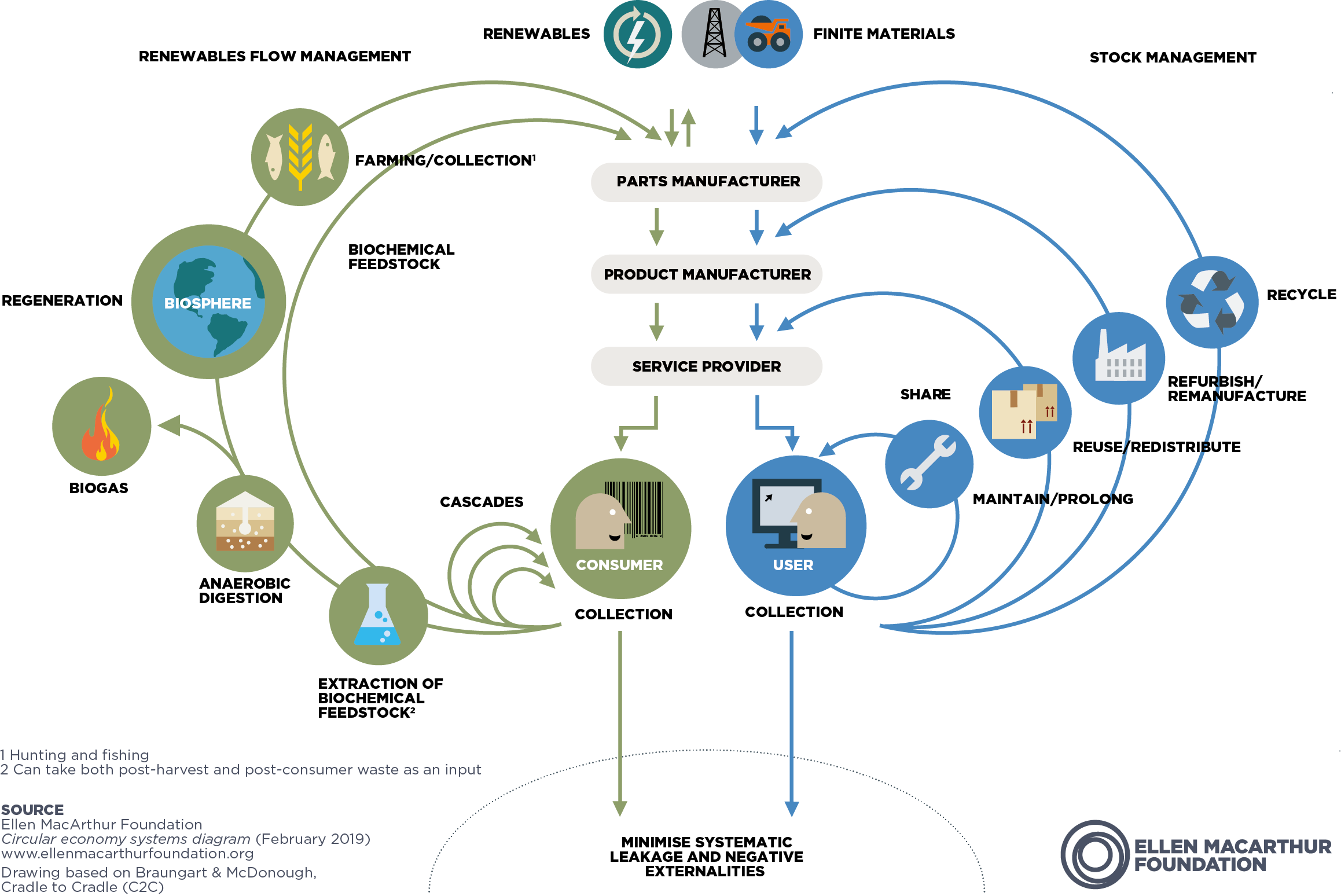
As technology becomes more embedded in everyday life, design in the 4IR emphasizes user-centric solutions and personalized experiences, enabled by data analytics and machine learning. There's also a growing focus on sustainable and circular design principles driven by global challenges like climate change and resource scarcity.
The complexity of 4IR technologies requires designers to work collaboratively across disciplines, integrating insights from engineering, biology, computer science and psychology. This interdisciplinary approach is crucial for innovation and for addressing the ethical, social and environmental implications of new technologies.
The 4IR encourages designers to engage in speculative and critical design practices, exploring future scenarios and the societal impact of emerging technologies. This approach helps to envision potential futures and guide the development of technology in a responsible and human-centered direction.
What Are the Key Technologies of the 4IR
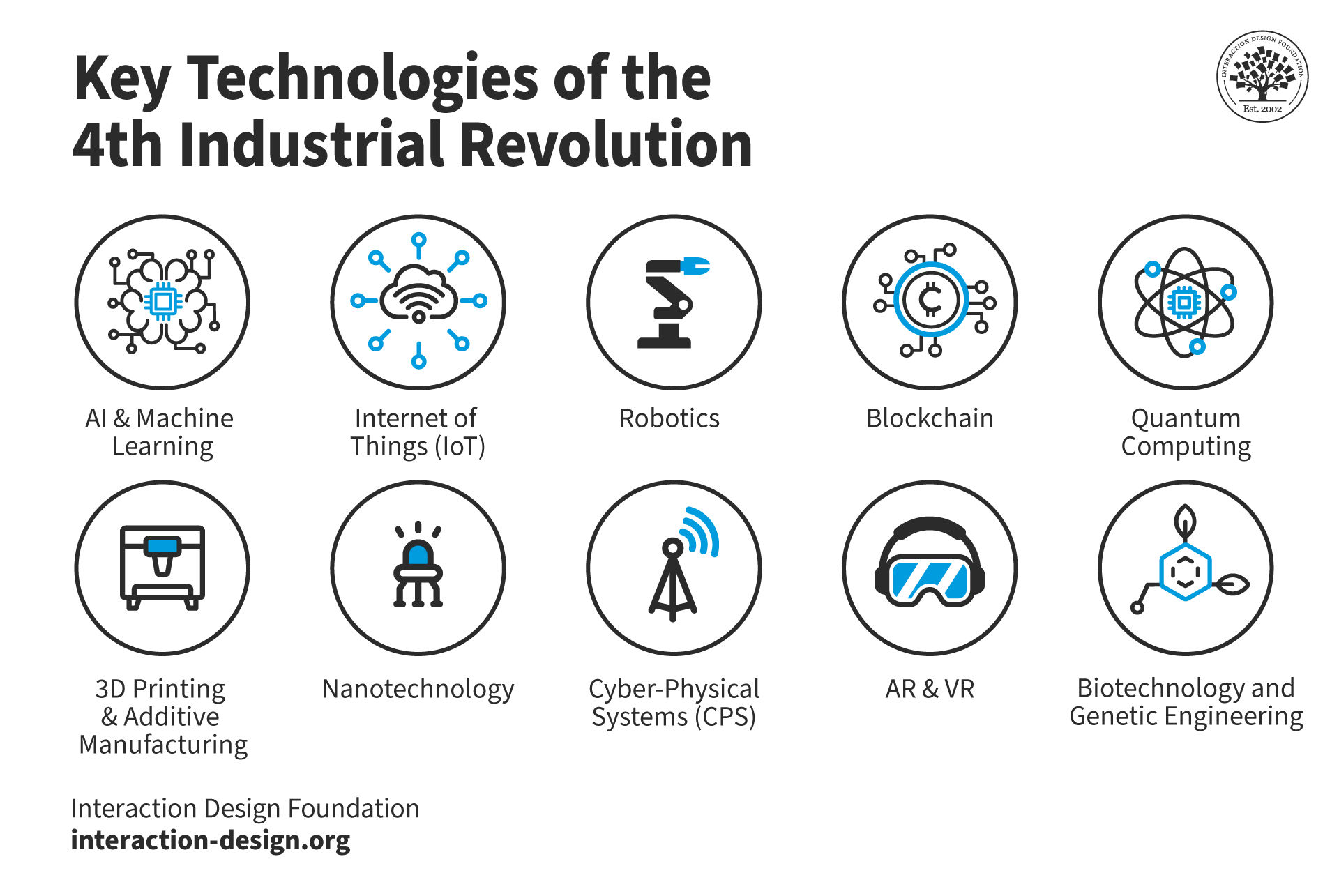
© Interaction Design Foundation, CC BY-SA 4.0
Artificial Intelligence (AI) and Machine Learning
AI involves machines and programs capable of performing tasks that typically require human intelligence. Machine learning, a subset of AI, enables computers to learn from data and improve over time. These technologies are revolutionizing sectors by enhancing decision-making, automating tasks and creating new services and products.
In this video, AI Product Designer Ioana Teleanu discusses AI’s impact on the world:
Learn more about machine learning in this video:
Internet of Things (IoT)
IoT refers to the network of physical objects embedded with sensors, software and other technologies for the purpose of connecting and exchanging data with other devices and systems over the internet. This interconnectivity enables more efficient processes and improved data analytics, which impacts everything from home automation to industrial manufacturing.
Smart lighting product, Philips Hue, uses IoT technology to offer a wide range of smart bulbs, lamps, and light fixtures that can be controlled via the Philips Hue app or through integration with other smart home systems. These lights can change color, brightness, and even sync with media content for an immersive experience. See how Philips uses IoT in their product expansion, Philips Hue Secure, in this video:
Robotics
Robotics technology involves the design, construction, operation and use of robots for various tasks. With advancements in AI and machine learning, robots are becoming increasingly sophisticated, capable of performing complex tasks autonomously or augmenting human capabilities in industries like manufacturing, healthcare and services.
In this video, Robotic company Boston Dynamics demonstrates how their robot Atlas can aid in construction:
Blockchain
Blockchain is a decentralized ledger of all transactions across a network, which enables secure, transparent and tamper-proof record-keeping. While it underpins cryptocurrencies like Bitcoin, its applications extend to secure transactions, smart contracts and supply chain management.
Organizations like IBM's Food Trust network uses blockchain to trace the production, processing, and distribution of food products to enhance safety and reduce waste.
Quantum Computing
Quantum computing represents a significant leap forward in computing power—it uses principles of quantum mechanics to process information at speeds unattainable by traditional computers. This technology has the potential to revolutionize fields such as cryptography, drug discovery and complex system simulation.
Google's quantum AI lab is researching how quantum computing could accelerate machine learning tasks by processing complex data more efficiently than classical computers. Learn more in this video:
3D Printing and Additive Manufacturing
3D printing builds objects layer by layer from digital models. This offers unprecedented flexibility in manufacturing. It enables rapid prototyping, custom manufacturing and complex designs not possible with traditional methods which impacts industries from healthcare (with prosthetics and organ printing) to aerospace and automotive.
In this video by Mayo Clinic, 3D printing is used to create more hygienic and effective casts and splints for a patient with fractures and other injuries:
Biotechnology and Genetic Engineering
Advances in biotechnology and genetic engineering have enabled us to manipulate living organisms or their components to develop or make products, which improves healthcare, agriculture and environmental sustainability. Techniques like CRISPR-Cas9 gene editing have opened new possibilities for disease treatment and precision medicine.
Learn more about gene editing in this video by TED-Ed:
Nanotechnology
Nanotechnology manipulates matter at the atomic and molecular scale and promises significant advancements in materials science, medicine and electronics. Its applications range from more effective drug delivery systems to water treatment processes that remove contaminants at a molecular level.
In this video by Johns Hopkins Institute for NanoBioTechnology, learn how nanotechnology can be used to fight cancer:
Augmented Reality (AR) and Virtual Reality (VR)
AR and VR technologies are changing the way we interact with digital environments. AR overlays digital information onto the physical world, while VR creates immersive digital environments. These technologies have applications in education, training, entertainment and beyond.
Learn more about VR, its history and its future in this video:
Cyber-Physical Systems (CPS)
CPS are integrations of computation, networking and physical processes. Embedded computers and networks monitor and control the physical processes, with feedback loops where physical processes affect computations and vice versa. This integration is foundational for smart grids, autonomous vehicle systems and smart factories.
In this video watch how a Tesla vehicle drives itself:
These technologies are not only transformative in their own right, but are also interrelated. They often converge to create innovative solutions and opportunities across a variety of sectors and different levels of society and the economy. The potential of the 4IR lies in how these technologies are harnessed to drive forward human progress, address global challenges and reshape the world for the better.
The Impact of the 4IR: Case Studies
Environmental Protection: IoT for Monitoring and Conservation
Rainforest Connection transforms recycled smartphones into solar-powered acoustic devices that monitor rainforest sounds. AI algorithms analyze these sounds to detect illegal logging and poaching in real time, enabling rapid response to protect wildlife and forests. This case study highlights how 4IR technologies can be creatively applied to combat environmental destruction and biodiversity loss.
Learn more about Rainforest Connection’s work in this video:
Agro 4.0: More Efficient Farming
The World Economic Forum’s (WEF) Centre for the Fourth Industrial Revolution (C4IR) introduced technology to small and medium farms in Colombia. The technology includes soil, water and climate sensors, as well as AI, cloud computing and drones. The project managed to reduce the farmer's costs by 30% and increase their yields by 20%.
Watch the C4IR video to learn more
Healthcare: AI-Driven Diagnostics and Personalized Medicine
Google's DeepMind developed an artificial intelligence system that can accurately detect over 50 types of eye diseases from 3D scans. Scientists from Google's DeepMind division, University College London (UCL) and Moorfields Eye Hospital developed software through deep learning techniques that can detect numerous prevalent eye conditions from 3D scans and subsequently recommend treatment options for the patient. This technology enables early diagnosis and treatment to potentially prevent vision loss in millions of people worldwide. Not only does it improve diagnostic accuracy and patient outcomes, but it can also reduce healthcare costs.
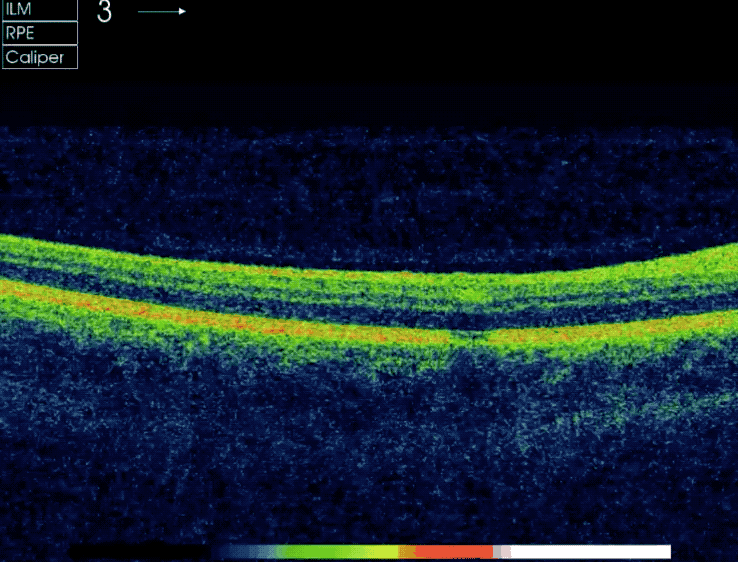
© UCL, Moorfields, DeepMind, et al, Fair Use
© Interaction Design Foundation, CC BY-SA 4.0
What are the Impacts of the 4IR?
The 4IR is not just a technological revolution; it's a catalyst for comprehensive change—how we live, work and relate to one another. Here are some of the major impacts and implications of the 4IR:
Economic Transformation
Productivity and efficiency: The integration of technologies like AI, robotics and IoT significantly boosts productivity and operational efficiencies across industries. In most cases, this leads to reduced costs, improved production rates and enhanced product quality.
New business models and markets: The 4IR has enabled new, innovative business models (e.g., platform-based economies like Airbnb and sharing economies like Uber) and the creation of markets that didn't exist before, particularly in the digital and service sectors.
Job displacement and creation: While automation and AI have displaced many traditional jobs, particularly in manufacturing and routine white-collar tasks, they also create new jobs that require advanced digital skills and competencies in technology development, data analysis and cybersecurity.
Societal Changes
Education and skill development: There's a growing need for education systems to adapt and an emphasis on STEM education, critical thinking, creativity and lifelong learning to prepare individuals for the jobs of the future.
Inequality and digital divide: The benefits of the 4IR risk being unevenly distributed, which could exacerbate income inequality and widen the digital divide between those with access to new technologies and skills and those without.
Enhanced connectivity and communication: The global proliferation of the internet and mobile devices has led to unprecedented levels of connectivity to enable new forms of social interaction, collaboration and information exchange.
Technological Advancements
Accelerated innovation: The rapid pace of technological advancement in fields like biotechnology, nanotechnology and quantum computing has already begun to revolutionize healthcare, energy and other industries.
Cybersecurity challenges: As more devices and systems are connected, vulnerabilities to cyber-attacks increase. Data privacy and system security are increasingly critical challenges.
Environmental Considerations
Sustainable development: Technologies emerging from the 4IR offer promising solutions to environmental challenges, including more efficient resource use, renewable energy technologies and smarter, more sustainable cities.
Climate change mitigation: Advances in technology are crucial for monitoring environmental changes, improving energy efficiency and developing new methods for carbon capture and storage to combat climate change.
Ethical and Governance Issues
Ethical considerations: The development and application of technologies like AI and genetic engineering raise profound ethical questions about privacy, consent and the nature of human identity.
Regulation and governance: There is an increasing need for effective governance frameworks to ensure that the development and deployment of new technologies are aligned with societal values and ethical principles. Policymakers are challenged to keep pace with technological innovation while safeguarding public interests.
The History of the World’s Industrial Revolutions
The 4IR is built upon the foundation laid by the three previous industrial revolutions, each marked by a significant leap in technological capabilities that transformed societies and economies. It's important to understand these precursors as they provide essential context to grasp the scale and scope of the changes the 4IR represents.
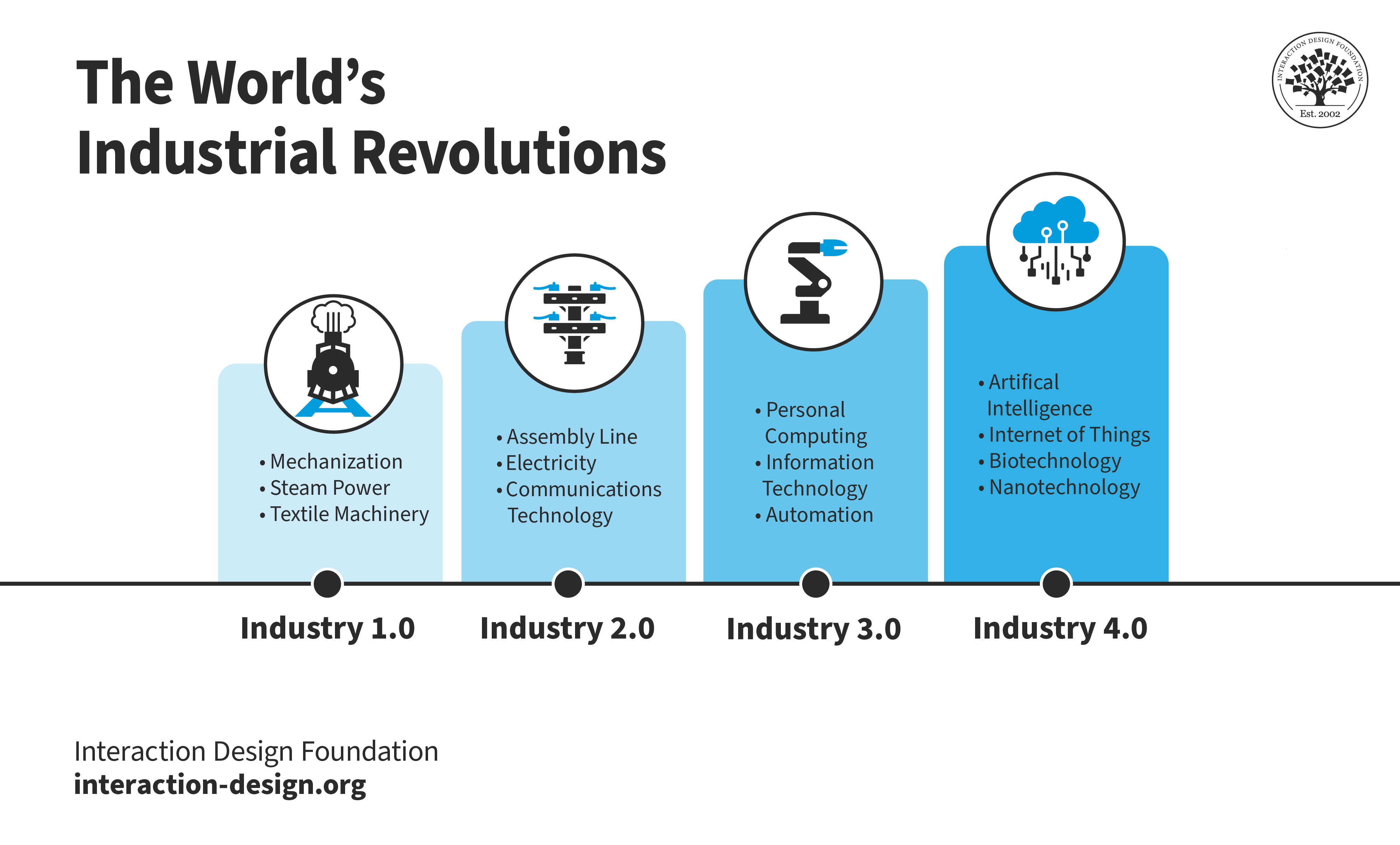
© Interaction Design Foundation, CC BY-SA 4.0
First Industrial Revolution: Late 18th to Early 19th Century
The first Industrial Revolution’s start and end date are widely debated, but the general consensus is that it spanned from about 1760 to 1840. It was characterized by the transition from hand production methods to machines through the use of steam power and water power. The textile industry was among the first to be transformed, with the invention of the spinning jenny and the power loom. This era saw the rise of mechanized factories, which significantly increased production capabilities and led to urbanization as people moved to cities for work.
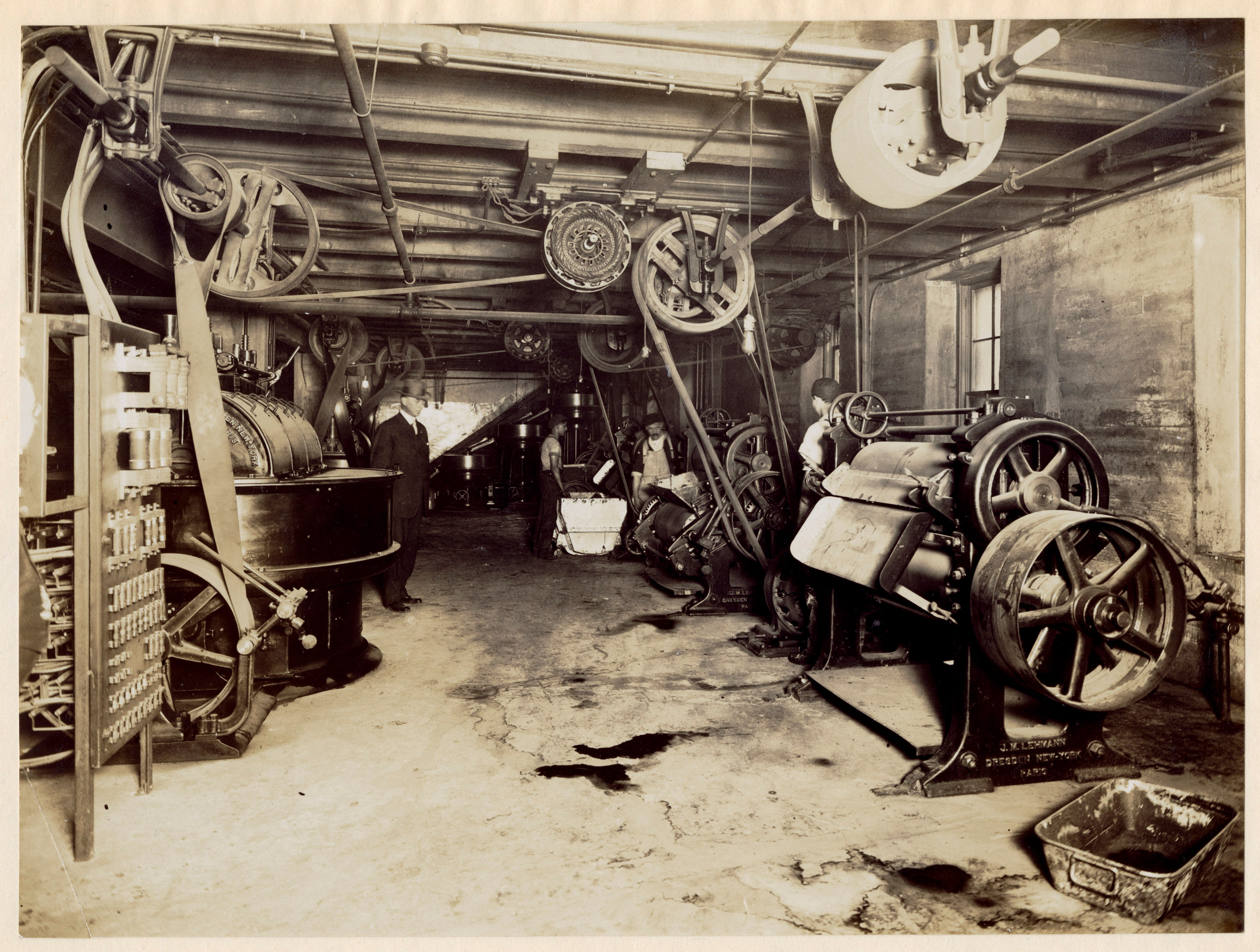
A factory from the First Industrial Revolution. The machinery harnessed steam and water power.
© National Geographic, CC BY-SA 4.0
Second Industrial Revolution: Late 19th to Early 20th Century
This period is roughly dated between 1870 and the beginning of World War I in 1914. The Second Industrial Revolution was marked by the introduction of electricity—this transformation led to more advanced manufacturing and production technologies. The development of the assembly line, notably used by Henry Ford in the mass production of automobiles, drastically increased efficiency and made goods more accessible to the masses. This period also saw significant advancements in chemical, electrical and steel production.
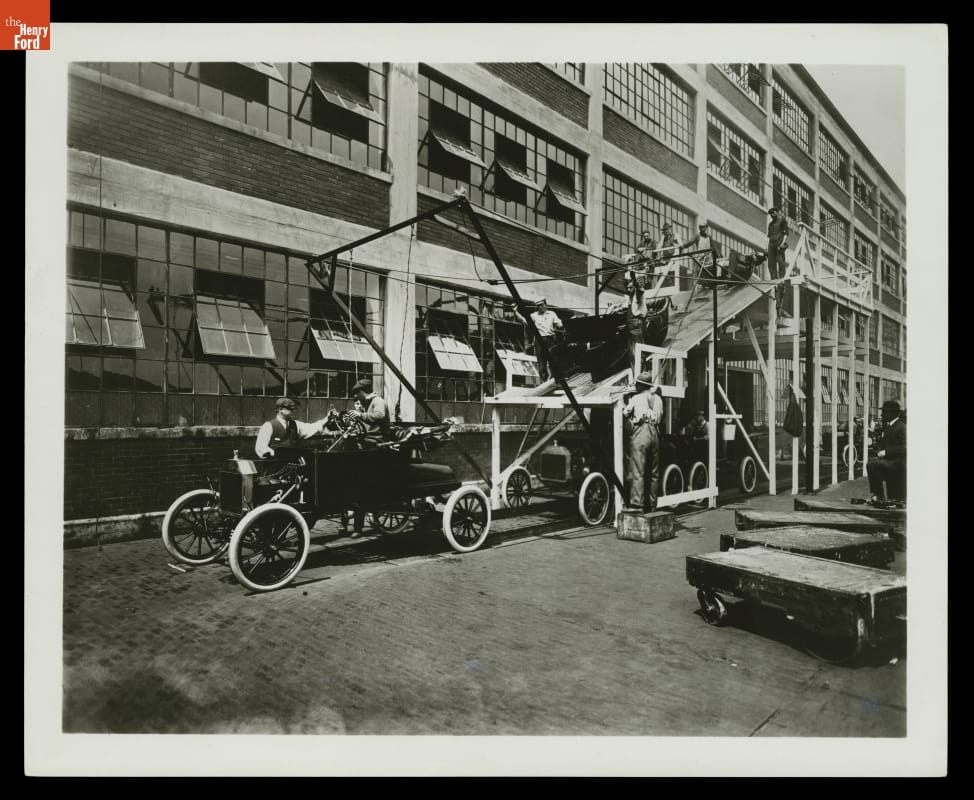
The Ford Model T assembly line circa 1913-1914. Henry Ford was one of the first to use an assembly line for mass production. When a Model T left the assembly line at Ford's Highland Park plant to be shipped by rail, it was not fully assembled. In this photograph, workers temporarily place bodies onto a chassis. At the loading dock, bodies and wheels would be removed and packed separately to conserve freight car space. Full assembly took place at branch plants closer to the vehicles' final destination.
© The Henry Ford, CC BY-SA 4.0
Third Industrial Revolution: Mid-Late 20th Century
Also known as the Digital Revolution, this era started around the 1950s-1970s. It’s defined by the move from analog electronic and mechanical devices to digital technologies. The invention of the personal computer, the internet and information and communications technology (ICT) transformed the way people live, work and communicate. It laid the groundwork for the globalized, interconnected world of today. The Third Industrial Revolution transitioned into the Fourth Industrial Revolution around the early 21st century, so there is no definitive end date for this period.
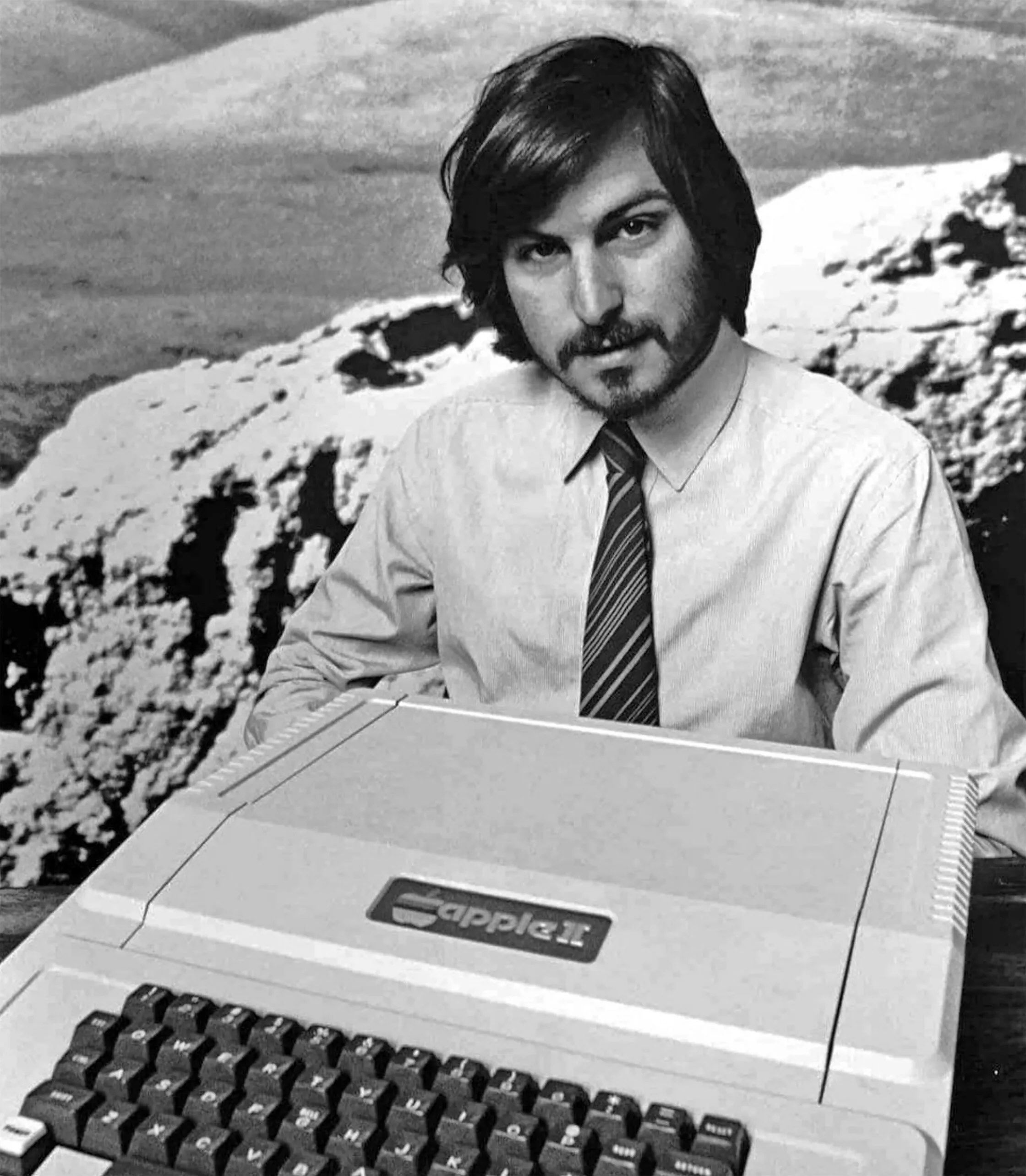
Steve Jobs with the Apple II. It was released in 1977 and is an example of an early personal computer.
© Alamy, CC BY-SA 4.0
Fourth Industrial Revolution: 21st Century
The 4IR builds on the digital revolution and is marked by a fusion of technologies that blur the lines between the physical, digital and biological. It’s characterized by breakthroughs in a range of areas including AI, robotics, the Internet of Things, genetic engineering, quantum computing and others. Unlike previous revolutions, the 4IR evolves at an exponential rate, transforming almost every industry and many aspects of human life.
Each industrial revolution brought about drastic changes in economic structures, social systems and the global order. While the first three revolutions introduced and then expanded upon mechanization, electrification and digitization, respectively, the 4IR stands out for its potential to integrate cyber-physical systems and impact all disciplines, economies and industries on a global scale.
How the Industrial Revolutions Have Impacted Design
The industrial revolutions have profoundly influenced design. The technological, social and economic shifts of each era have shaped how, what and why humans design. Here's how each industrial revolution has impacted design:
First Industrial Revolution
Mass Production: The advent of steam-powered machinery enabled the mass production of goods, leading to product standardization. Design during this period focused on functionality and manufacturability, often at the expense of aesthetics and individuality.
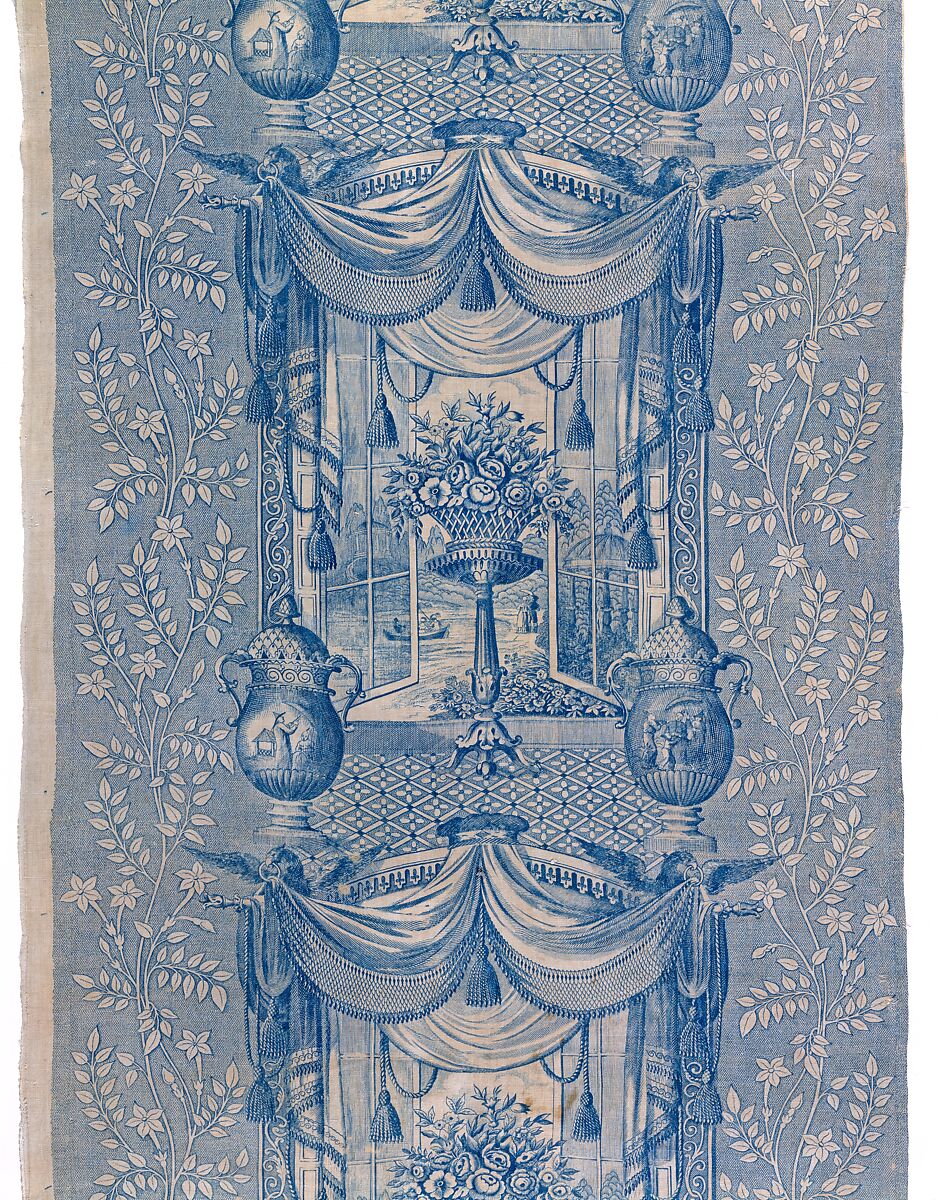
This British printed cotton textile is an example of the 1820 is an example of Regency design.
Second Industrial Revolution
Industrial design: The introduction of assembly line manufacturing and advancements in materials and processes, such as steel production and electrical engineering, birthed the discipline of industrial design. Designers began to focus on the user experience, ergonomics and aesthetic appeal of products and thus recognized the value of design in marketing and brand differentiation.
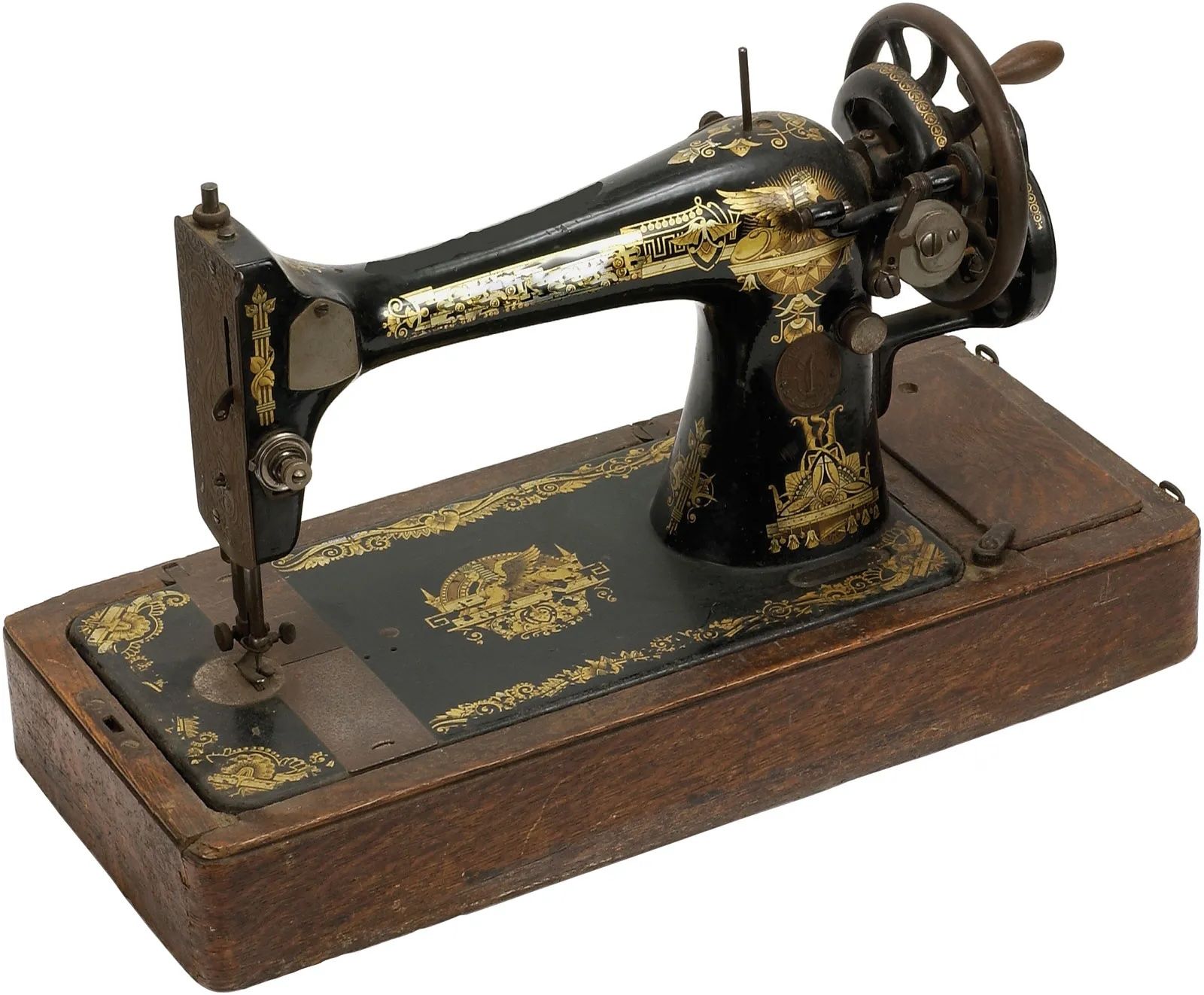
A Singer sewing machine circa 1880.
© Singer, Fair Use
The Singer sewing machine is a pivotal and recognizable invention from the 19th Century. Isaac Merritt Singer, an American inventor, patented the first practical sewing machine in 1851. Their machines were a combination of practical functionality with elaborate Victorian aesthetics. Its design not only made sewing more efficient and less labor-intensive but also turned the sewing machine into a desirable household item. In 1889, they released the first electric sewing machine. The Singer Company's innovations in mass production and global marketing strategies are classic examples of Second Industrial Revolution practices.
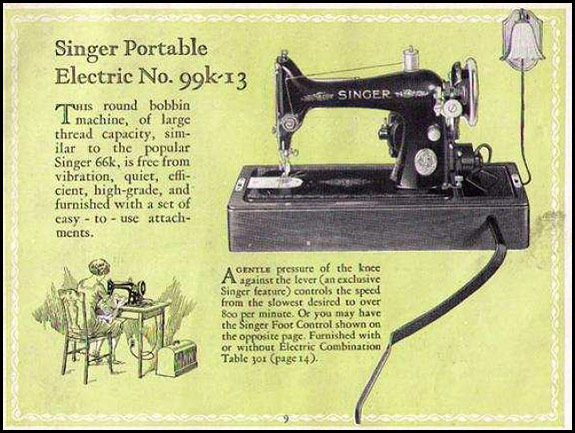
An advertisement for the Singer 99k-13, the first electric sewing machine released in 1889.
© Singer, Fair Use
Third Industrial Revolution
Digital design: The Digital Revolution introduced computers and digital technology which revolutionized the way designers work. Computer-Aided Design (CAD) and other digital tools enabled more complex and precise designs to foster innovation in product development, architecture and graphic design. The rise of the internet also opened new avenues for digital and web design and emphasized user interface (UI) and user experience (UX) design.

Milton Glaser's "I Love NY" logo was designed in 1977 for a New York State advertising campaign—it’s one of the most iconic works in graphic design. With its simple yet impactful composition, the American Typewriter font paired with a heart symbol replacing the word "love", Glaser's design captured the essence of New York City's resilience and appeal during a time of economic hardship and social unrest. This logo revitalized New York's image and showcased the power of graphic design in shaping public perception and fostering a sense of community and pride. Although the Digital Revolution was in its nascent stage, the impact of evolving technologies on design practices was becoming increasingly apparent.
© Milton Glaser, Fair Use